
Labour First Stage
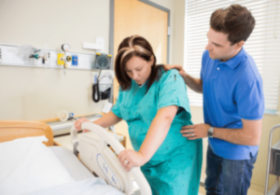 The first stage of labour is defined as the period of time from established labour to transition. This stage of labour can lasting anywhere from an hour to many hours. During the first stage of labour your cervix will progressively dilate as it prepares for your baby to pass through into the birth canal during the second stage of labour.
Are you wondering how you will know you are in labour? Perhaps you are overdue and attempting to bring on labour by sheer force of will! Do you wonder what preterm labour is and what will happen if your baby decides to arrive early? This section explores the first stage of labour in its many presentations.
Articles on Labour – First stage

Stand and deliver! Everything you need to know about birth positions
When it comes to childbirth and birth positions most midwives will tell you it’s not something you can do lying down. Yet, this is exactly how many women still give birth in Australia. “Walking during labour was the only way I could deal with the pain. I walked the pain away. It felt great to be able to do this for myself. I felt in control. In my head I actually kept thinking, I’m walking away from the pain

Labour
As the birth approaches a woman’s body begins to prepare for the stage of labour. Signs that women may experience prior to labour include: Show (pink mucous discharge from the vagina), engagement of the baby’s head, more frequent Braxton Hicks contractions, a change in baby’s movements as they run out of space, weight loss of up to 1 kg, low pelvic pressure due to baby’s position, some diarrhoea and nesting behaviour (some women experience a surge in energy just

Swept away!
Going overdue is never easy but going so overdue that you have to be induced can be traumatic for women. There is no doubt that nature is the best midwife when it comes to labour, and induction comes with its own risks. Not only is the labour associated with medical induction more painful but the risk of having a caesarean is also greater. This is especially true for women having the first baby. Women wanting to avoid medical induction

Eating and Drinking During Labour: Let Women Decide
January 20, 2010 Media Release Women should be allowed to eat and drink what they want during labour, say Cochrane Researchers. The researchers carried out a systematic review of studies examining the traditional practice of restricting food and fluid intake during labour and found no evidence for any risk or benefit for women at low risk of complications. Throughout much of the last century, eating and drinking during labour was considered dangerous and many maternity units operated “nil by

Oxytocin: The hormone of love and birth
Love has long been the domain of poets, artists and philosophers, but it's only in the past 50 years that it has really begun to hold the attention of scientists. What they are discovering is startling. Oxytocin, now dubbed the "hormone of love", holds immense sway over the way we feel when we make love, how we give birth, how successful we are at breastfeeding and how we connect to our newborn babies. Even Jamie Oliver, cook extraordinaire, has

Preterm Birth
In Australia around 16,000 babies are born preterm each year (6-7percent of births). Preterm birth is defined as birth occurring before 37 weeks of pregnancy or more than three weeks early. It is divided up into mildly preterm (32-37 weeks), moderately preterm (28-31 weeks) and extremely preterm (before 28 weeks). Disappointingly the rate of preterm birth has not really changed in over 20 years and there are concerns that it is in fact on the rise in Australia. Who

Can music decrease pain in labour?
For centuries, humans have explored and espoused the therapeutic benefits of music. From dental work, to acupuncture sessions, to IVF egg collections, the use of music is now routinely encouraged. It promotes relaxation and assists patients in managing stress during medical procedures. Similarly women are often encouraged to play their favourite music during labour and birth. But beyond promoting relaxation, can listening to music actually reduce the pain of labour? A recent study conducted with a group of Taiwanese
Intermittent Auscultation
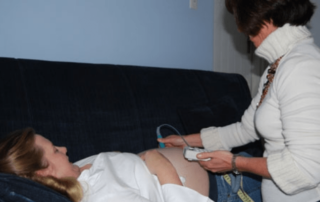
Sarah had planned a home birth for her second baby. The birth of her first baby had taken place at the local primary unit and all went well. She had commented antenatally that she would rather have this baby at home. This is because she felt the constant interruptions at the primary unit made her labour so much longer. Sarah was well throughout her pregnancy and went into labour in the early hours one Sunday morning. She called me

Eating and Drinking in Labour
Current evidence suggests women should be supported in eating and drinking in labour if this is what they choose to do. Despite what the research says some hospitals and health care professionals enforce a policy that restricts women eating in labour. Conversely most hospital policies and health care professionals encourage women to drink during labour. Food and fluid restrictions during labour came into place in the 1940’s when it was discovered that a leading reason for maternal death was